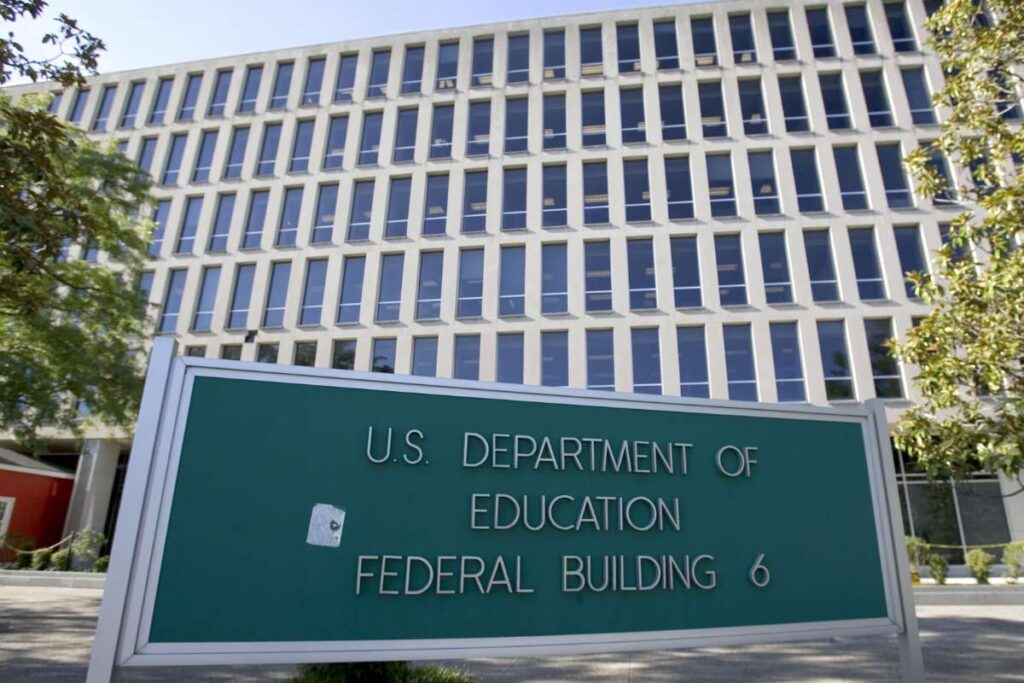
The Current Situation
In March 2025, President Trump signed an executive order calling for the dismantling of the U.S. Department of Education.[¹] The executive order, titled “Improving Education Outcomes by Empowering Parents, States, and Communities,” aims to return educational control to states and local communities.
This represents a perfect case study for Chesterton’s Fence because many people on both sides are arguing passionately without first understanding why the fence was built.
Understanding the Fence: Why Was the Department Created?
The Department of Education was created by Congress in 1979 (officially established in 1980) at the urging of President Jimmy Carter.[³] But here’s what most people don’t know about why it exists:
Original Purpose:
• Civil rights enforcement: According to OPB’s reporting, “its main function was to try to ensure civil rights, and that’s always been a part of the Department of Education’s function.”
• Information collection and coordination: The Department’s predecessor office (created in 1867) existed primarily to collect information on schools and teaching to help states establish effective school systems.
• Federal program administration: To consolidate scattered education programs across multiple federal agencies into one coordinated department.
The Chesterton’s Fence Questions
Before arguing whether to dismantle the Department, we should ask:
1. What problems was it designed to solve?
– Fragmented federal education programs across multiple agencies
– Inconsistent enforcement of civil rights laws in schools (particularly Title IX and protections for students with disabilities)
– Lack of coordinated data collection on educational outcomes
– Need for federal oversight of programs like student loans and grants
2. What would happen if we removed it?
The ACLU warns that dismantling the department could put “millions of students’ education and civil rights at risk.” Specifically:
– Federal student aid programs (Pell Grants, student loans) would need new administrative homes
– Civil rights enforcement mechanisms would be disrupted
– Title IX protections could become harder to enforce consistently
– Special education funding and oversight (IDEA) would require restructuring
3. Has anyone tried to remove this before?
Yes. According to Harvard’s Graduate School of Education, “The U.S. Department of Education has been a subject of political debate since its creation in 1980.” Multiple administrations have proposed eliminating it, but none succeeded – suggesting there may be practical obstacles beyond political will.
4. Who benefits from this that we might not be seeing?
– Students with disabilities who rely on federal IDEA funding and enforcement
– Low-income students receiving Pell Grants (administered by the Department)
– Students facing discrimination who use federal civil rights protections
– States that receive federal education funding with technical assistance
The Informed Debate
After understanding why the fence exists, you can now have an informed position:
Arguments for dismantling (that acknowledge the fence):
– The original coordination problem could be solved differently in 2025
– States might enforce civil rights more effectively with direct authority
– Federal involvement may have expanded beyond the original limited mission
– Administrative costs could be reduced by distributing functions
Arguments for keeping it (that acknowledge the concerns):
– Civil rights enforcement requires federal consistency across states
– Consolidation prevents the fragmentation problem from returning
– Student aid programs need centralized, efficient administration
– Some states historically failed to protect civil rights without federal oversight
The Key Insight
Notice how different this debate becomes when you start with Chesterton’s Fence. Instead of:
– “The Department of Education is government overreach – abolish it!”
– “Anyone who wants to eliminate it hates education!”
You get:
– “The Department was created to solve X, Y, Z problems. Do those problems still exist? Are there better solutions? What are the risks of different approaches?”
That’s the difference between tribal thinking and rational analysis.
Footnotes
[1] The Clery Center. (2025). “President Trump signs executive order to dismantle the Department of Education.” Retrieved from https://www.clerycenter.org/trump-signs-eo-to-dismantle-ed
[2] The White House. (2025, March). “Improving Education Outcomes by Empowering Parents, States, and Communities.” Retrieved from https://www.whitehouse.gov/presidential-actions/2025/03/improving-education-outcomes-by-empowering-parents-states-and-communities/
[3] OPB. (2025, February 6). “How the Department of Education came into existence.” Retrieved from https://www.opb.org/article/2025/02/06/how-the-department-of-education-came-into-existence/
[4] OPB. (2025, February 6). “How the Department of Education came into existence.” Retrieved from https://www.opb.org/article/2025/02/06/how-the-department-of-education-came-into-existence/
[5] U.S. Department of Education. “An Overview of the U.S. Department of Education.” Retrieved from http://www.ed.gov/about/ed-overview/an-overview-of-the-us-department-of-education–pg-1
[6] ACLU. (2025). “Trump’s Attack on the Department of Education Explained.” Retrieved from https://www.aclu.org/news/racial-justice/trumps-attack-on-the-department-of-education-explained
[7] Harvard Graduate School of Education. (2025, February). “Unpacking the U.S. Department of Education: What Does It Actually Do?” Retrieved from https://www.gse.harvard.edu/ideas/edcast/25/02/unpacking-us-department-education-what-does-it-actually-do