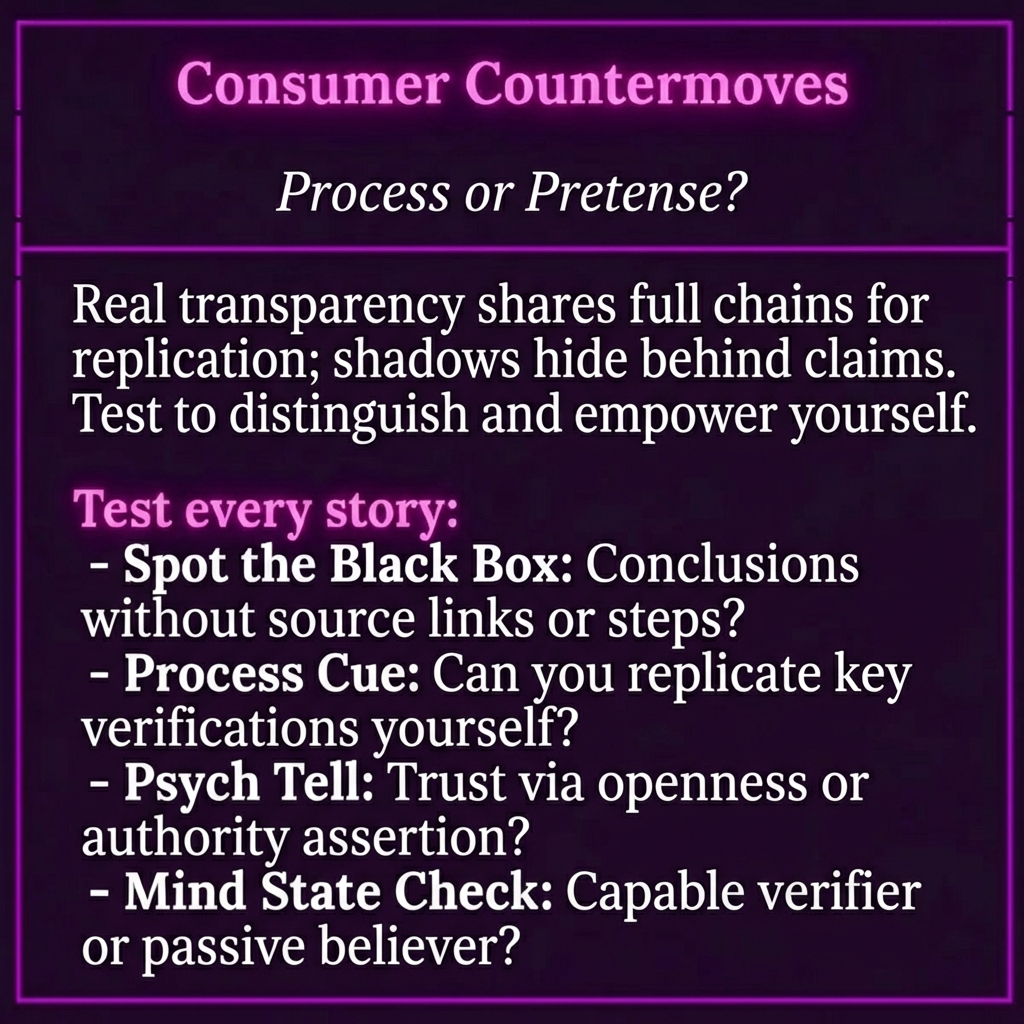
Full process disclosure invites scrutiny and builds unbreakable trust.
Interpretation of the Law
In 1902, a bespectacled woman named Ida Tarbell published the first installment of her History of the Standard Oil Company in McClure’s Magazine. She didn’t merely accuse John D. Rockefeller of monopoly; she published the rebate contracts, railroad shipping records, corporate charters, and secret agreements that proved Standard Oil systematically crushed competitors through predatory pricing and political bribery.
Tarbell’s masterstroke wasn’t the accusations; it was opening her notebook. She explained exactly how she obtained faded Pennsylvania Railroad ledgers from small-town stations, cross‑referenced them against Standard Oil’s annual reports, and tracked rebate flows through 20 years of freight schedules. When Rockefeller’s lawyers demanded her sources, she handed them public records and court filings; nothing proprietary and everything replicable.
Readers didn’t just believe her, they could verify her words themselves. Judges cited her documentation in antitrust rulings. Competitors used her methodology to build their own cases. Tarbell didn’t just own the truth –she taught ownership. Her 19 installments dismantled an empire, not through rhetoric, but through a blueprint for transparency and rigor anyone could follow.
A century later, Gerard Ryle at the International Consortium of Investigative Journalists (ICIJ) revived this approach with the 2013 Offshore Leaks. Instead of hoarding 260 gigabytes of corporate registry data, ICIJ built a searchable database and invited 86 reporters from 42 media partners to query it independently. Each outlet ran their local angle –Russian oligarchs, Chinese tycoons, Canadian tax havens– but all pointed back to the same transparent methodology: company name, incorporation date, director listings, public registry cross‑references.
When governments attacked, ICIJ simply pointed to the database. “Verify it yourself.” Their methodology became their shield.
Ethical influence follows this pattern: don’t claim authority, demonstrate your process. Audiences crave not blind faith, but participation in verification. Full disclosure turns consumers into stakeholders, critics into collaborators, and attacks into validation opportunities.
Observance of the Law
Flash back to 1854 London, where John Snow confronted a cholera outbreak killing one in six Soho residents. Conventional wisdom blamed “miasma”: bad air from filth. Snow had a hunch: contaminated water.
He didn’t proclaim his theory from the lectern. Snow walked the streets with a pump handle map, plotting every cholera death against the Broad Street pump. He interviewed widows about their husbands’ final drinks, bakers about their water sources, mothers about their babies’ bottles. Then he published the map with pump locations, death clusters, and verification methodology.
When critics demanded proof, Snow handed them the map and his door‑to‑door interview logs. Public officials removed the pump handle. Cholera deaths plummeted. Snow’s authority didn’t rest on his medical degree; he’d made verification so simple a plumber could do it.
Half a world and more than half a century away in 1912, Marie Curie faced accusations that her radium research was fraudulent sensationalism. The French Academy demanded her lab notebooks. She handed over 38 volumes –8,000 pages of temperature readings, ore purification logs, equipment calibrations, and observer signatures. Nobel committees didn’t just verify her data; they adopted her methodology. Radium became foundational to the study of chemistry.
These weren’t journalists, but their playbook became journalism’s secret weapon. Fast‑forward to 2014: when ProPublica investigated electronic voting machines, they didn’t summarize code flaws; they published the source code, testing scripts, vulnerability checklists, and penetration test videos. Election officials across 40 states couldn’t dismiss it as partisan hackery; the methodology invited their own IT teams to replicate the flaws.
Cognitive science explains why this works. Daniel Kahneman’s work on “System 2 thinking” shows people trust processes they understand and can mentally simulate. When Tarbell explained rebate math, readers could check her arithmetic. When ICIJ published registry search parameters, reporters could run the same queries. Transparency creates mental ownership. The truth feels like your discovery, not their claim.
The deeper genius: disclosing methodology increases authority exponentially. One investigator verifies 100 documents. One hundred readers, each verifying 10, create 1,000 data points. Critics who engage the process often become allies. Attacks that ignore methodology just look like bad faith.
In an era of deepfakes and AI hallucinations, methodology becomes your digital fingerprint; proof of human effort that no algorithm can fake.
Keys to Influence
Notebook Transparency Publish your source acquisition log: “Document X obtained via FOIA #2016‑FOI‑1234, mailed 3/15/16, received 4/2/16.” –a modern Tarbell’s railroad ledger trail.
Reproducibility Recipe “Run this Google Earth coordinate against this timestamped tweet against this license plate database.” Bellingcat’s MH17 geolocation.
Verification Gates Three explicit checkpoints: “Primary source acquisition → Cross‑referenced → Third party confirmed.” ICIJ’s leak triage.
Anti‑Deepfake Armor Timestamped screen recordings of database searches, WHOIS lookups, archive.org screen captures all prove human methodology.
Red Team Appendix “Three colleagues attempted falsification; here are their failures and our responses.” Builds preemptive credibility.
Layperson Audit Trail “Non‑experts replicated 80% of findings using these five steps.” Scales verification beyond ‘specialists’.
Transgression of the Law
Hiding your methodology breeds suspicion and invites demolition when gaps in the chain surface leaving the influencer threadbare of the trust that transparency alone builds. Transgressors withhold their source logs, verification steps or raw data, claiming “proprietary methods” or “ethical protections” only to crumble under demands for proof, the absence of which reveals the bias or fabrication. Historical cases expose the peril: in 1835, The New York Sun’s “Great Moon Hoax” serialized astronomer John Herschel’s fabricated bat-winged moon creatures with pseudo-methodology (telescopic “improvements”), captivating readers until French astronomers debunked the unverifiable claims, tanking the paper’s credibility for years. During the 1920s Scopes “Monkey Trial,” prosecutor William Jennings Bryan concealed biblical literalism behind vague “expert consultations,” losing public sway when Clarence Darrow forced process disclosure in open court.
Psychologically, opacity triggers the “illusion of explanatory depth”: audiences overestimate their understanding of complex issues from layman’s summaries until scrutiny demands detail and the skeptic comes knocking. Modern journalism falters similarly: The Guardian’s 2013 Snowden leaks initially dazzled with “insider access” sans full metadata trails, eroding authority when critics like Glenn Greenwald exposed selective releases favoring narrative. WaPo’s 2020 Watergate parallels in Trump-Ukraine coverage omitted key whistleblower process docs, fueling “hoax” counters and trust erosion among independents (Pew: 25% drop in neutral trust 2019-2021). Theranos’ Elizabeth Holmes pitched blood-test “breakthroughs” with black-box “nanotech,” collapsing in 2015 under FDA probes revealing no verifiable lab protocols, costing $9B valuation. Ramifications mount: lawsuits, boycotts, rival ascendance. The dynamic reverses; opaque influencers forfeit verifications multiplicative power, becoming isolated as transparent rivals rally crowds to co-own the truth.
PURPLE SHADOW: Transparency Theater
The Deception Publish glossy “methodology sections” that sound rigorous but reveal nothing verifiable. “Sources spoke on the background of..” or “proprietary analytics confirm that..” creates the illusion of process while protecting the actual sausage‑making from scrutiny.
The Self‑Destruction When real investigators demand raw data, the bluff collapses. “Methodology” becomes proof of deception. Legal discovery exposes the emptiness. Trust evaporates twice as fast as if you’d simply made the claim without pretense.
Real‑World Examples
BuzzFeed’s Steele Dossier (2017) “Multiple sources confirm” with zero documentation trail. Later proven largely unverified. The “full methodology” pretense made retraction more humiliating than simple speculation would have.
Rolling Stone’s “A Rape on Campus” (2014) Detailed “investigative process” description but no source verification logs, contact records, or cross‑checks. $7.5M defamation verdict; magazine’s investigative credibility destroyed.
University “Reproducible Research” Scandals Science journals demand “methods sections,” but raw data/code vanishes. Retractions spike when others can’t replicate. What looked like rigor proved theater.
The shadow promises transparency’s benefits without its costs. Purple influencers pay the price of full disclosure and reap authority’s compound rewards. Theater collapses at first serious inspection.